
interior top image

Denominationally Promiscuous: Reflections on Leading Music Outside of One’s Own Tradition

I started a new job this semester.

I now serve part-time as Director of Music for the Anglican Studies program at Saint Paul University. Anglican Studies is less of a stand-alone program and more of a collection of courses, workshops, and community-building activities to support Anglican students studying at our Roman Catholic institution.

 

Many of them are pursuing ordination within the Anglican Church of Canada, so we hope to form them in ways that will enrich their future ministry. My primary task is selecting and leading music for weekly Eucharists.

This new role has invited me to reflect on the “denominationally promiscuous” character of life as a church musician. I am Mennonite, not Anglican, but I regularly lead music in an Anglican setting and teach our students how to do the same. It has been a strange season of “faking it”:

  • In this role, I try to model confidence in the role even as I regularly make mistakes and learn more about the Anglican tradition. For instance, did you know that Anglicans—or, at least, Anglicans in Ottawa—often chant the Sursum Corda (“The Lord be with you” / “and also with you” etc.) and opening preface of their eucharistic prayer, then sing a setting of the Sanctus (“Holy, holy, holy Lord” etc.), but then speak the remainder of the prayer? That was confusing for me.
  • Each week, I try to select and lead music in ways that suit the rhythms and ethos of Anglican liturgy even as I bring my Mennonite assumptions to this role. For instance, the cohort of Anglican students is quite small, which means that it is best for us to repeat much of our repertoire from week to week to build confidence. That feels different from leading music in some Mennonite contexts where worship is characterized by a sense of novelty, making it difficult to repeat the same song for more than a couple of weeks at most.
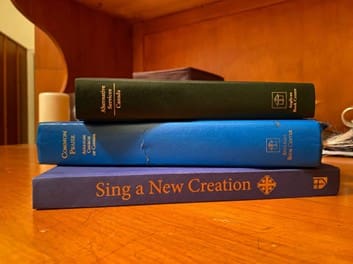
  • For the most part, our Anglican liturgies follow the Book of Alternative Services verbatim. For this reason, when I am introducing a song in an Anglican context, I tend to limit extemporaneous verbal instruction to one sentence—or, if possible, I don’t speak at all, instead inviting the congregation to sing with me through physical gestures or an instrumental cue. Once again, this manner of leading a song is different from what I encounter in some Mennonite contexts, where it is more common to share a brief verbal reflection on a song and provide specific instructions (e.g., “We will skip the third verse” or “Please rise to sing”) before singing it.
As I come to the end of my first semester in this role, I am reflecting on the last three months while also looking ahead to the rest of the academic year. I have already learned a lot, but I continue to wonder: How should I approach leading music in the context of someone else’s tradition?

I have found it helpful to draw from my experience as a qualitative researcher to develop a twofold answer to this question. Qualitative research often involves entering spaces where you feel like an insider and an outsider at the same time, seeking to learn from the people who are already there. In these situations, I try to remember, first and foremost, that it’s not about me. Even if I hold a leadership position among Anglicans right now, I am not the authoritative voice on how Anglicans worship or what they sing. Leading well as an outsider requires deference to people with a deeper understanding of Anglicanism, making use of the resources that are most familiar to them—including hymnals, of course, but also extending further to psalm tones, singing bowls, unspoken cues, and whatever else might sustain their musical tradition. It would be inappropriate to impose my Mennonite habits and assumptions on this existing musical culture.

At the same time, as a qualitative researcher, I recognize that I am not neutral. I bring my Mennonite identity into this Anglican space. I cannot set aside the values and experiences that I carry with me from another tradition, nor can I help it when I feel confused or frustrated by aspects of the Anglican tradition that are unfamiliar to me. The task thus becomes choosing how to manage and share these parts of myself with my Anglican peers in a way that fosters mutual learning and appreciation between us, and, most significantly, equips them for effective leadership in their respective Anglican communities:

  • Sometimes, that means quietly acknowledging to myself that my approach to leading a song two days ago at a Mennonite church will not transfer well into today’s Anglican context, so it is best to adapt my methods and see it as an opportunity to learn something new.
  • At other times, I might be too quick to assume that what worked in a Mennonite context can easily transfer to an Anglican context, forgetting that I sometimes need to make tweaks. For instance, there is a song that we often sing at our weekly Eucharist with a slightly different melody than the version that I first learned in a Mennonite context. I have therefore started to lead the song on a couple of occasions according to the melody that I know best, which has required me to stop and start again with a soft smile. These moments of vulnerability are just as formative and enriching for my Anglican peers as the moments when I lead them without making any mistakes.
  • Lastly, and only occasionally, there are times when it can be helpful for me to take some aspect of musical leadership that I learned in Mennonite communities and use it to enhance the way that I teach and lead our Anglican students. Just as I am finding that Mennonites can learn a lot from Anglicans, there are moments when I can suggest (with or without explicitly saying so) that a Mennonite perspective on some aspect of musical leadership can supplement what Anglicans already think about it. I see these moments as the exception, not the norm.

It is such a privilege, even if challenging at times, to serve in a role that is tied to a robust tradition that is not my own. Receiving a warm welcome from this year’s Anglican Studies cohort has positively shaped this transition for me. In turn, it is my task to support them, to the best of my ability and experience, as they lead their communities into ever more faithful understandings of what it means to be Anglican. Music is the way that I both serve and learn from them on this journey.

 

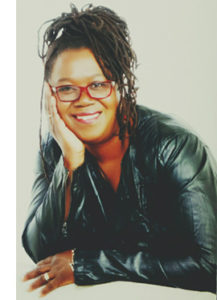
Mykayla Turner holds a Master of Sacred Music with a Liturgical Musicology concentration and a Master of Theological Studies. She obtained her A.C.C.M. in Piano Performance from Conservatory Canada. Currently, she is a PhD student in the Faculty of Theology at Saint Paul University in Ottawa, ON. Apart from her academic work, she is an active church musician and liturgist. She also co-directs Ontario Mennonite Music Camp and chairs the team of volunteers who maintain Together in Worship, a curated collection of free worship resources from Anabaptist sources.
“Elbows up!”

Canadians have been encountering this phrase a lot over the last few months. As a Canadian living in Ottawa, the nation’s capital, I most regularly come face-to-face with the “Elbows up!” banner in the window of an independent bookstore across the street from my university campus. In the wake of tariffs that put numerous Canadian industries at enormous financial risk, “Elbows up!” signals a new kind of nationalism. It consists, for the average Canadian, of buying and consuming local products. What does that mean for congregational song? Should I stop singing the songs that come to me from non-Canadian sources, especially the songs that come from across the southern border?


Music Fosters Relationships

Music is an important means of fostering ecumenical and cross-cultural relationships. Whether I hear my fellow Mennonites singing a Catholic folk song on an average Sunday morning or Sinach’s “Waymaker” at a weekend retreat, I am frequently reminded of how music crosses denominational lines and national borders more in the last century than any previous era. Along with many other scholars who have studied this phenomenon, I marvel at how I can readily connect to the wider Church in 2025 through the songs that I sing with local communities of faith (Ingalls, Swijguisen Reigersberg, and Sherinian 2018; Johnson and Loepp Thiessen 2023; Berwig Silva 2025).


Critical Self-reflection

At the same time, forming healthy ecumenical and cross-cultural relationships entails a lot of critical self-reflection. On one hand, it is important to recognize that I cannot sing a song from another community or culture in my own context without altering it to some degree. For this reason, Katie Graber invites communities of faith to engage in the case-by-case work of singing songs from other cultures with appreciation, not appropriation. If I am singing a song from a culture that is not my own, it is not a question of whether I am altering it, but how I am altering it. What is the most ethical and just way to engage with the song (including the possibility of not singing it at all)?

On the other hand, it is important to recognize that even a singular culture or tradition is extremely diverse. In my view, the currently tenuous relationship between the United States and Canada is an opportunity for Canadians to engage in deeper reflection on this point. What do we mean when we speak of “Canadian congregational song”? I recently attended an event hosted by Becca Whitla and Anneli Loepp Thiessen that asked this very question. For a few days in February, we gathered with other scholars and practitioners of congregational song and shared the music of our local communities. We learned that we are writing and singing an enormous variety of music! We cannot capture Canada in a single song or genre, and I am grateful that, if nothing else, the Canadian impulse to step away from the influence of the United States in this season is illuminating the musical diversity that exists within our national borders. As John D. Roth observes, ecumenical relationships are a beautiful means of sharing gifts with one another, but “to the extent that ecumenical conversations tend to highlight and reinforce an identity rooted in distinctives, these exchanges…cultivate a false sense of identity” (Roth 2013, 10). Similarly, it may be tempting for Canadians to reduce themselves to a monolithic musical or cultural identity in comparison to the United States, but a season of inward reflection on what constitutes Canadian congregational song can foster awareness and appreciation of our diverse musical landscape.


I Wonder…

On behalf of Canadian churches, then, I wonder: How might we see this political moment as an opportunity to amplify the music of individuals and communities that has been overlooked until now? As a white settler Canadian, how might I engage more deeply with the music of Indigenous or immigrant communities? How might we view this season as one of localized creativity and collaboration so that we might make an even richer contribution to the wider Church in future seasons? While I lament the damage that the relationship between Canada and the United States is sustaining at this time, may it compel us—whether we find ourselves in Canada or elsewhere—not to neglect our relationships with all who live, work, and worship alongside us.


Mykayla Turner holds a Master of Sacred Music with a Liturgical Musicology concentration and a Master of Theological Studies. She obtained her A.C.C.M. in Piano Performance from Conservatory Canada. Currently, she is a PhD student in the Faculty of Theology at Saint Paul University in Ottawa, ON. Apart from her academic work, she is an active church musician and liturgist. She also co-directs Ontario Mennonite Music Camp and chairs the team of volunteers who maintain Together in Worship, a curated collection of free worship resources from Anabaptist sources.
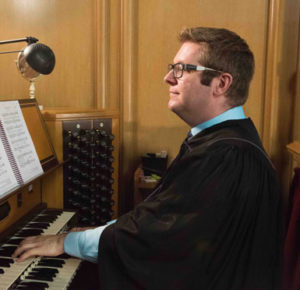
Author – Adam Perez is a doctoral student in liturgical studies at Duke Divinity School.


Worship Across the Spectrum

There are few places where the who’s who of worship across the spectrum get together in public. For the last while, the Calvin Symposium on Worship has been that place. While other worship and music conferences have bloomed and faded (National Worship Leader Conference, anyone?), the Symposium on Worship has continued to grow and diversify and attend to the new challenges that face local worship leaders and pastoral liturgists of all varieties.


One thing I love most about the symposium (my 8th? time in 10 years): Symposium doesn’t easily fit into a category–it’s nearly as diverse as the use of the word ‘worship’ itself. It is not simply about music nor is it simply about theology, though it includes those things. It’s a space where songwriters, lay liturgical leaders, pastors, missionaries, chaplains, theologians, retreat leaders, professors of all kinds, get together around that source and summit of the church’s life: worship. It not only draws them in as attendees, but highlights their voices as expert leaders in their respective areas, offering each of us the opportunity to learn and grow outside the week-to-week rhythms of our often insulated local communities.


And don’t let the name fool you: it goes far beyond the purview of Calvinists. It is an ecumenical smorgasbord, a feast for the liturgically hungry, an international party for worship practitioners. It’s like Sunday School on steroids—and all of it is designed for worship planners and leaders; with over 125 presenters from all over the world, you can imagine the breadth and diversity involved.


A snapshot of an ordinary day at Calvin Worship Symposium:

After a morning service with music led by the Netherlands-based Psalms Project (rock-band based metrical psalm settings) and a plenary session where the new One Lord, One Faith, One Baptism (African American ecumenical hymnal published by GIA) is showcased, you hit up the hallway of music and book tables. Moving into the midday breakout sessions, you attend “Top Ten Choral Techniques for Church Choir Directors” (Pearl Shangkuan) in the A block, catch “The ‘Brown Church,’ Christian Identity, and The Ordinary Practices of Christian Worship” (Robert Chao Romero and John Witvliet) in the B session—who had time for lunch?—before Sarah Jean Barton’s “Baptism and Christian Identity: Shaping Liturgical Practice from the Perspective of Disability” in the C block. For the late-afternoon Vespers, you pick from a variety of Minor Prophets-themed services led by groups from Western Seminary, Grace and Peace Church (Chicago), and others. The evening programming closes with yet another worship service that incorporates a diversity of musics and the exquisite video work and environment projection of Stephen Proctor. Exhausted from learning, you crash for the evening–only to hurry back in the morning to do it all for a second day.


Reflecting the increasing diversity of the cultural context of the U.S., while also providing for guests and the Christian family from beyond the Border Wall, I was so encouraged to see the increasing number of sessions offered for Spanish-speakers: a full day Thursday seminar, at least three sessions, and a Spanish-English bilingual vespers service, not to mention the many more on topics from and relating to global christian expressions.


Reflejando el crecimiento de diversidad en el contexto cultural de EE. UU., mientras que también proveyendo por visitantes y la familia cristiana más allá de la frontera, me sentí muy motivado al ver el incremento de sesiones ofrecidas para hispanohablantes: Una conferencia el día entero de jueves, por lo menos tres sesiones en español, y un servicio de vísperas bilingüe en Ingles y español, además de muchos mas temas relacionados a expresiones globales cristianas. En conjunto, este ofrecimiento constituye un currículo para hispanohablantes en el Symposium.


Get There

From Kathmandu to Scotland and Los Angeles to the Netherlands this annual global gathering is vision to behold. (I personally met groups of leaders and learners from both Brazil and the Ukraine—incredible). In the realm of congregational song, a number of giants were present, from James Abbington to Judith Christie McAllister, from David Bailey to Eddie Espinosa, from James Bobb to Tony Alonso, Anthony Ruff to Emily Brink. I could go on (…Greg Scheer, Eric Sarwar, Glenn Packiam…) but I’ll quit there. (Oh and Liz Vice. I’ll stop now. For real this time). The roster is bursting at the seems. The same could be said of the preaching and community leaders, theologians and multicultural worship planners present.


If you haven’t been to Symposium yet, get there. Whether you’re a volunteer choir member or the leader of a multinational ministry, don’t let the uncomfortably cold clime of Western Michigan in late-January deter you. Get there. Next year. Put it on your calendar now. Pre-register. You’ll be glad you did. More importantly, your church will be glad you did. [Conference Website Click Here]


Invitation to Toronto

Join us to learn about our ground-breaking new resource The Center for Congregational Song! You will hear from some of Toronto’s top song leaders and hymnologists and sing together in a “Big Sing,” celebrating the diversity of the church’s song.

Registration

Registration is free, but required so that we can make sure that our venue has enough space to house everyone.

RSVP for this event using the form below:


Plenary Speaker

The Hymn Society, Director of Research, The Center for Congregational Song, Toronto

Dr. Lim Swee Hong is the Deer Park Associate Professor of Sacred Music at Emmanuel College, and the Director of the Master of Sacred Music Program. Before joining Emmanuel on July 1, 2012, Swee Hong served as an Assistant Professor of Church Music at Baylor University, Texas. Prior to his work at Baylor, he served as the Lecturer of Worship, Liturgy, and Music at Trinity Theological College in Singapore. He is also the Director of Research for the Hymn Society in the United States and Canada.


More Presenters

We are excited to have an all-star lineup of Toronto-based leaders!

Song Leader, Hymn Leader, Denise Gillard, Toronto

Rev. Denise Gillard is the founder and Executive Artistic Director of TC3 and The HopeWorks Connection, a not-for-profit organization dedicated to empower youth through the performing arts, academics and relieving poverty.

Jason Locke, Toronto, Composer, Organ, Organist, Church Music

Jason Locke is a church musician, choir director and composer, living in Toronto, Canada.

Toronto, Singing Together, Hussaein Janmohamed, Composer, Conductor

Hussein Janmohamed is a Toronto-based choral artist, composer and music facilitator/conductor passionate about excellence in the choral arts as a medium for cultural dialogue, building positive relations, and accessing the human spirit.


Conducting, Church Music, Lori Anne Dolloff, Singing

Lori-Anne Dolloff is Associate Professor of Music Education and the Area Head for Choral Music at the Faculty of Music in the University of Toronto. Her research in music education has also served to support music education in First Nations communities. Dolloff is also a composer/arranger with many choral pieces published with Boosey & Hawkes, and is frequently sought out as a guest conductor for choral festivals and workshops.

Church Music, Hilary Donaldson, Song Enlivener, World Music, Transforming Every Guest, Music That Makes Community, Toronto, United Church

Hilary Seraph Donaldson is a congregational song enlivener with a passion for strengthening community through shared song, global music, and paperless worship.

Church Music, Becca Whitla, Toronto, United Church, Congregational Singing

Becca Whitla works as a community music maker and organizer in Toronto and is the Director of Chapel at Emmanuel College.
For Becca, music is a critical, vibrant and healing part of any community.


Event Co-Sponsors

We are grateful to our co-sponsors for this event, the Southern Ontario Chapter of The Hymn Society, or “SOCHS.” For more information on SOCHS, you can go to their website: http://sochs.org/