

Last week, a diverse group gathered including songwriters, theologians, artists, worship leaders, music industry professionals, ecumenists, researchers, students, teachers, and administrators, though many wear multiple hats. We represented a rich variety of ecclesial traditions, North American geographic backgrounds, and ethnoracial identities. Participants included Joyce Borger, Nelson Cowan, Cindy De Boer, Levi Faas, Clayton Faulkner, Jess Grace Garcia, Nate Glasper, Brian Hehn, Sarah Kathleen Johnson, Sheri Meyer, Mark Nicholas, Jeremy Perigo, Satrina Reid, Ben Snoek, Becky Snippe, Marcell Silva Steuernagel, and Debbie Wong.
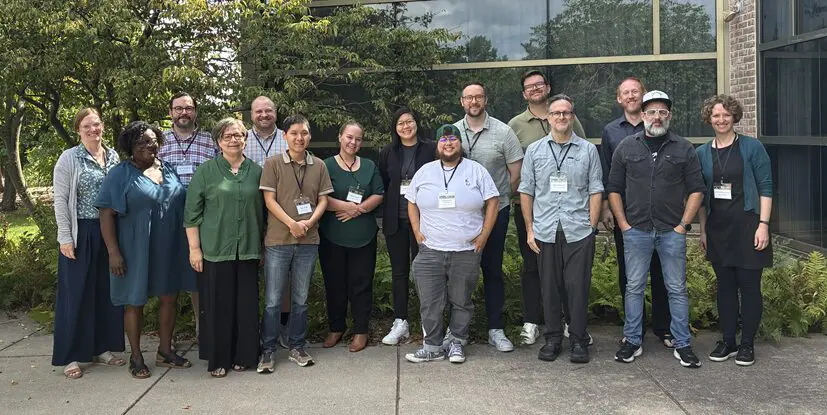 About half of the attendees were members of previous CCLI Top 100 vetting groups. Over the last few years, various denominations evaluated the CCLI Top 100 list from their unique perspectives, asking which songs are the healthiest for their traditions to regularly incorporate into worship. For a description of that process and some of the results, check out this open-access issue of The Journal of Congregational Song.
 But we weren’t there to talk about those projects in the past tense.
The purpose of our gathering was to talk about Contemporary Praise and Worship Music (CPWM), ask critical questions about the songs and the industry that produces them, and dream together about healthier ways forward.
The assumptions going in
No single group can ever fully represent the church, nor can every issue be addressed in a two-day gathering. Even so, our group entered the room with several common assumptions and baseline ideas about CPWM:
- The genre has a lengthy history spanning nearly 100 years.
- It represents a global ecumenical repertoire used by churches of all sizes, across many countries and traditions—including Pentecostals, Evangelicals, Mainline Protestants, Roman Catholics, and even some Orthodox worshipping communities.
- Like any genre of sacred music, some selections are well-crafted while others are not.
- The context of when and how a musical selection is used in liturgy shapes its meaning, value, and reception.
The Concerns Raised
The first half of our gathering focused on raising concerns and discussing perceived difficulties with the vetting processes, the songs themselves, and the surrounding industry. Because these conversations involved numerous breakout sessions and lengthy full-group discussions, this summary is by no means comprehensive. Still, several key themes stood out:
- Narrow Perspectives: Past CCLI Top 100 vetting groups represented a relatively narrow perspective, lacking sufficient socioeconomic and ethnogeographic representation.
- Vetting Projects Need Updating: Because CCLI vetting projects take a long time to complete and the CCLI Top 100 adds and subtracts a few songs each year, the vetting projects need updating every few years in order to stay relevant.
- Privileged Viewpoints: Many people-groups were absent from our room, meaning our discussions stemmed from particular perspectives that skewed toward privileged, formally educated, and mainline Protestant viewpoints.
- Industry Realities: The CPWM industry is a complex web of organizations and, more importantly, people. While some industry professionals believe they are doing God’s work to the best of their ability, others simply try to maximize profit or exploit celebrity culture. Ultimately, everyone in the industry is human and therefore flawed; no system can completely bypass the human condition.
- Copyright Limitations: Current copyright law lacks clarity and comprehensiveness regarding worship music, particularly concerning streaming and altering texts for theological reasons during worship.
- Racial Discrepancies: CCLI and the broader music industry carry a history of excluding artists of color and continue to perpetuate various race-based discrepancies.
- Ecumenical Blind Spots: The World Council of Churches appears to either ignore this genre completely or has chosen not to use it in global gatherings.
- The Large-vs-Small Church Gap: The gap between large and mid-to-small churches continues to widen in the United States, with small-church resources paling in comparison.
- Bi-Vocational Leaders: Local leaders in small churches are often bi-vocational or manage multi-point charges, leaving them without the time or resources for continuing education or training in CPWM selection and leadership.
- Skewed Data: Flawed reporting mechanisms mean that small and mid-sized churches are underrepresented in CCLI data. Consequently, the CCLI Top 100 lists do not represent “what the church is singing,” but rather “what the largest, most well-resourced churches are singing”.
After naming these issues, we examined them in depth. We explored the underlying factors, what the industry is (or isn’t) doing to address these problems, and shared disagreements, insights, and prayers. Ultimately, we acknowledged that:
- While our group is a small piece of a much larger picture, critical conversations like these matter.
- Without a major “disruption” of the CPWM industry, it will continue to perpetuate significantly unhealthy patterns.
- We must trust the Holy Spirit, who inspired many CPWM songs and continues to use them powerfully, while simultaneously working toward a holier church and a more just world.
- Every “industry” mechanism and song is made up of real people. When critiquing problematic or sinful systems, we must always keep people in our hearts.
- “The word ‘christian,’ when applied to anything other than a person, is a marketing term” – quote by Derek Webb shared by Clayton Faulkner in our gathering
Ways Forward
We were under no illusion that a single weekend could solve the world’s problems. However, everyone in the room shared a deep love for Jesus and the church, alongside years of experience researching, leading, and studying CPWM. Below is a crowdsourced list of dreams and next steps divided into three categories: ecumenical, denominational, and local.
- ECUMENICAL
- Wider Tables: Host future meetings that deliberately include more voices that were underrepresented or entirely missing from the room—such as official denominational representatives, underrepresented demographics (Black, Latino/Spanish-speaking, LGBTQ+, etc.), interdisciplinary scholars, and more industry professionals.
- Global Guidance: Encourage major ecumenical bodies like the World Council of Churches and the National Council of Churches to engage these issues and offer guidance.
- Copyright Reform: Address systemic justice issues rooted in copyright law, legal vagueness, and compliance structures.
- Systemic Disruption: Develop strategies to disrupt current structures and create space for critical reflection and correction.
- Ecumenical Convergence: Draft an ecumenical document offering loving critique and healthy paths forward for local churches, songwriters, and publishers.
- Cultural Training: Foster deep conversations and training regarding cultural differences in songwriting, ownership, and copyright.
- Alternative Lists: Create alternative or supplementary lists to the CCLI Top 100, such as filtering data exclusively from small-church reporting.
- DENOMINATIONAL
- Broadened Vetting: Expand denominational vetting groups to regularly include underrepresented demographics.
- Local Creativity: Fund and facilitate local creative initiatives at the grassroots level.
- Process Transparency: Demand continued transparency from the CCLI Top 100 Vetting teams.
- Small-Church Support: Increase small-church representation at denominational events and develop targeted resources.
- Seminary Training: Equip future worship leaders in seminaries with the skills and resources needed to vet CPWM locally.
- LOCAL CHURCH
- Spaces for Creativity: Cultivate environments that encourage local artistic expression.
- Local Songwriter Sundays: Dedicate services to featuring songs written by or for your local community.
- Reframing Worship: Re-examine what “good” worship sounds like and reshape congregational expectations around music.
You might be asking yourself, “Why did I just read this?” or “So what?” Our group didn’t set out to provide simple answers, but rather to engage in faithful conversation, build relationships, ask hard questions, and dream of better ways forward.
So, what is your area of influence? Where and with whom can you support local songwriting? Where can you practice thoughtful reflection to ensure the CPWM you choose genuinely supports your tradition’s faith and expressions?
For more reading on this topic, here are some great reads:
- “Evaluating the CCLI Top 100 (and Beyond): An Ecumenical Roundtable” article in The Journal of Congregational Song.
- https://worshipleaderresearch.com/integrated-worship-songwriting-network/
- Following the Worship Money – Worship Leader Research
- The CCLI Top 100 Changed …And Nobody Is Talking About It. – Worship Leader Research
Special Thanks
Special thanks to the Calvin Institute of Christian Worship who underwrote this gathering and served as our host, and thanks to my co-convener Nelson Cowan, whose leadership in the field is continually thoughtful and collegial.
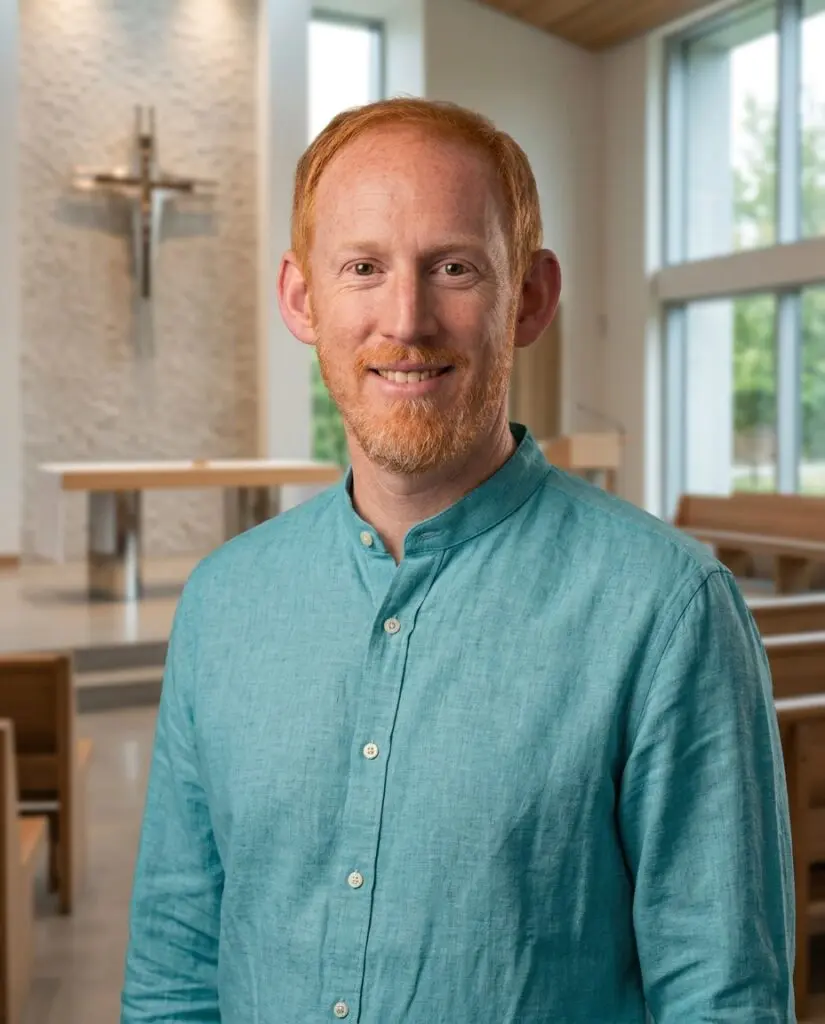 Brian Hehn is the Director of The Center for Congregational Song and served as the co-convener of the described gathering.