
interior top image

Crafting A Hymn Tune: 40 Tricks of the Trade

by Al Fedak

  1. Choose a text to which you feel a strong attraction.
  2. Read the text aloud numerous times.
  3. Determine the hymnic meter of the text (e.g., 8.6.8.6, LMD, etc.)
  4. Identify and mark the strong and weak syllables.
  5. Determine whether the tune should begin with an upbeat or a downbeat. When some stanzas of a particular text begin with strong syllables, and others with weak ones, try to match the opening rhythm which appears in the majority of the stanzas, and especially, whenever possible, in the first. It may sometimes be advantageous to include an opening pick-up note to be sung only on stanzas where it is needed (as in “O Come, All Ye Faithful”).
  6. Study each verse to determine a possible formal scheme for your tune. Where might melodic repetition occur, and where is new melodic material called for?
  7. Try reading the text aloud in different rhythms, to determine whether a duple, triple, or compound musical meter might fit the text best. Sometimes a combination of duple and triple meters is called for—don’t overlook the possibility of changing time signatures within the tune.
  8. Taking into consideration the overall tone of the text, decide whether the melody ought to be major, minor, or modal.
  9. If the opening words of the text naturally suggest to you a particular melodic and/or rhythmic shape, seize upon that idea, at least to get the composition process started. It may lead you in a fruitful direction.
  10. However, don’t become so enamored of any idea that you are unwilling to change it or even to discard it altogether. Be prepared to reject anything you have written in exchange for something better, no matter how promising an idea may have seemed at first. An important aspect of composition is the process of changing one’s mind and deciding what NOT to do.
  11. If the opening words of the first stanza don’t immediately suggest a strong opening melodic or rhythmic gesture, perhaps the opening words of later stanzas will, so start there instead. Or, if the hymn has a refrain, consider setting that to music first, and work your way backward.
  12. Strive to make the very first notes of your tune distinctive, memorable, and in most cases, upward in general direction.
  13. Beginning with these opening notes, try improvising a melody as you sing the text, or improvise a tune at the keyboard while reading and/or singing the words aloud.
  14. As much as possible, try to match textual accents with musical accents. (See #4 and #5 above.)
  15. Remember that aside from dynamic considerations, accents can be conveyed musically by means of pitch, rhythm (duration), and metrical placement. Notes which are higher (or lower) in pitch than their neighbors, or are held longer, draw more attention to themselves than do their surrounding notes: i.e., they are, by definition, accented. Likewise, notes on strong beats of the measure receive more emphasis than do those on weak beats. (Harmonic accents are also possible—see #31 below.)
  16. Consider using melismas to create emphasis on individual syllables. A melisma can also be helpful in accommodating the peculiarities of a text whose meter or rhythmic scheme varies from stanza to stanza. (As an example of this, see my hymn tune RIVERDALE.)
  17. Keep the melody within a manageable vocal range. C to high D is practical; an occasional low B or Bb, or high Eb (or very rarely, a high E) may be acceptable in some circumstances, as long as the tune’s overall tessitura remains comfortable.
  18. Try to include a good balance of stepwise and skipwise movement, both upward and downward, in the contours of your tune.
  19. A hymn tune is a musical miniature: every note counts. So as a general rule, one should use repeated notes sparingly, since they convey a certain lack of melodic direction.
  20. Identify climactic moments in the text. Ideally, the climax will be located at the same point in each stanza. If this is not the case, you may need to decide which stanza’s climax is the most important one to highlight as you fashion your melody.
  21. Place the highest note of the tune carefully. This should usually be located in the final third of the tune, and almost never at the end of a phrase (when singers’ breath is running out).
  22. Consider the effect that repetition will have upon your music. Try to lay out the form so that the tune does not become tiresome over several stanzas.
  23. Strive for variety at cadence points. A melody with phrases that come to rest on only one or two different pitches (for instance, scale degrees 1 & 5) may lack sufficient interest. More cadential variety generally yields a more interesting tune.
  24. Try to balance rhythmic repetition with rhythmic variety. Employing similar (or identical) rhythm patterns from one line to the next can produce a sense of internal coherence, but overuse of any pattern unchanged can become tedious.
  25. Once you have sketched out a tune, sing it over and over, using all stanzas of the text. Better yet, record the music, and sing along with your recording, as though you were a worshipper in the pew. Be on the alert for awkward or unnatural moments, and do not hesitate to change whatever needs changing.
  26. At some point in the process, compare your work with other, pre-existing hymn tunes having the same meter. As a composer, it is always good to see how others have dealt with issues similar to the ones you face.
  27. In your harmonization, strive for clarity of harmonic direction.
  28. Work for a strong and interesting bass line. The best bass lines create good two-part counterpoint with the tune, and clearly define the harmonies, even without the help of the inner voices.
  29. A stepwise or “walking” bass line can be a very helpful device. It can often be used to justify your choices of harmony, and gives an impression of forward movement to the music.
  30. Vary the texture and spacing of the chords in your harmonization, both for the purposes of color, and to create interest in the lines of the individual voice parts. Do this even if the hymn is to be sung in unison with instrumental accompaniment: an interesting accompaniment is always desirable, whether sung, or played on organ, piano, guitar, or whatever.
  31. Don’t overlook the emotional implications of harmony. Once all the basic functional aspects of your harmonization have been fulfilled, try substituting a more colorful harmony here and there to highlight or emphasize particular words or phrases. The simplest chord substitutions involve the use of secondary harmonies for primary chords, minor chords for major, and vice versa.
  32. If you get stuck, and are having difficulty harmonizing a particular note or passage, remember that any note in a melody may be either harmonic or non-harmonic. If harmonic, it may be the root, third, or fifth (or occasionally the seventh) of a major or minor triad (or, less often, of a diminished or augmented triad). If non-harmonic, the note in question may be treated as an upper or lower neighbor, a passing tone, a suspension, an appoggiatura, or an escape tone, depending on its context (i.e., what happens immediately before and after the note, both melodically and harmonically). Don’t be intimidated by all of this: experiment with the various possibilities.
  33. Remember that first-inversion harmonies often substitute well for root-position chords. They can yield smoother bass lines and result in a subtler, more polished effect.
  34. Avoid functionless second-inversion triads at all costs! In traditional usage, second-inversion harmonies are only permissible (1) as cadential six-four chords, (2) as passing six-fours, and (3) as the result of bass arpeggiation or a pedal point.
  35. Maintain a consistent musical style in your harmonization. If your tune employs traditional harmonic language, follow the rules of good counterpoint and voice leading throughout. (In other words, resolve cadences properly, and avoid voice-leading errors such as doubled leading tones, parallel octaves and fifths, and melodic augmented seconds.) On the other hand, if your music is in a less conventional style, establish that style clearly at the outset, so that singers will have a better sense of what is to follow.
  36. Occasionally, as you work out your harmonization, the harmonies you select may suggest changes to the melody you have already written. Allow them to do so, if the overall effect is beneficial.
  37. Consider at all times the effect that your harmonization will have upon singing worshippers. The best and most helpful harmonizations are those which draw singers naturally and inevitably from one note of the melody to the next, even at first hearing.
  38. Once you have crafted a tune and a harmonization with which you are satisfied, put the music away and avoid thinking about it. After a few days, take it out and sing through it as though you were seeing it for the first time. If any part of the tune strikes you as awkward, difficult, or (worst of all!) dull, do not hesitate to discard any or all of it immediately and head back to the drawing board. Be ruthlessly self-critical.
  39. Next, allow more time to pass. If the tune still pleases you, show it to a friend or colleague (preferably one who is at least musical enough to sing hymns in church). Ask him or her to sing it and/or play it, and consider carefully what he or she may suggest.
  40.  Finally, at all times, keep in mind that hymn tunes are written for performance by, for the most part, unrehearsed non-musicians, at primarily non-musical events (i.e., church services). For this reason, the ideal hymn tune must be both fresh and foolproof, substantial, yet singable. This is a delicate balance, but one which, when achieved, yields the greatest rewards.


(c) Alfred V. Fedak www.alfredfedak.com
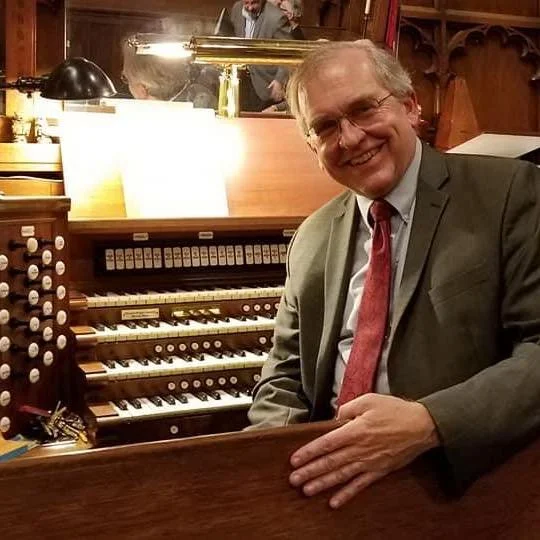
A widely-published and well-known composer of church music, Mr. Fedak has well over 300 choral and organ works in print, and more than 100 of his hymn tunes, as well as his many arrangements, appear in hymnals and collections throughout the English-speaking world and Asia. Mr. Fedak has earned many awards in organ performance and composition, including the AGO’s prestigious S. Lewis Elmer Award, as well as grants and prizes from the New York State Council on the Arts, the Music Teachers’ National Association, the Hymn Society, the Kalamazoo Bach Festival, and the John Ness Beck Foundation, and has received ASCAP Plus awards annually since 2001. He also continues to manage a busy schedule of freelance performing, teaching, and composition. Al and Susan are the parents of two grown sons: Peter and Benjamin. They have two grandchildren. 


Registration Now Open!

Invitation

For those who work for the church week in and week out, time away to rest, reflect, and re-inspire is important. Writing the Church’s Song is a three-day writing retreat for beginner and intermediate hymn writers. Two exceptional clinicians will challenge, inspire, and guide you as a hymn writer. These mentors will provide sessions on how to start writing hymns and how to hone your skills throughout the three days. Group sessions to build writing/composing skills will be offered, as well as one-on-one time with the mentors to discuss your works in detail and receive personal feedback.

Rest, Reflect, and Re-Inspire

Date & Location

October 21-24, 2026

Richmond, Virginia

Our hosts will be Richmond Hill, an ecumenical Christian fellowship and residential community who serve as stewards of an urban retreat center within the setting of a historic monastery.

Lodging & Food: Richmond Hill is a residential facility with simple but comfortable rooms available. The full registration includes a room within the Richmond Hill facilities, all your meals while on campus, and times of prayer with the community. For more information about what it’s like to attend a retreat at Richmond Hill, you can click here.


Registration

$500 Full Registration Fee (includes 3 nights lodging & all meals)

$325 No-Lodging Registration Fee (includes lunch & dinner for each day)

*two needs-based full scholarships are available. Contact ccs@thehymnsociety.org to inquire.
Registration Now Open!

Faculty

Text Writing – Adam M. L. Tice, FHS

Adam M. L. Tice is a widely-published hymn writer. He served as text editor for the 2020 USA/Canada Mennonite hymnal, Voices Together, and works for GIA Publications as Editor for Congregational Song. He curates GIA’s “Unbound” service, offering an ever-growing selection of new hymns and songs for individual download. In 2024, Adam was named a Fellow of The Hymn Society in the US and Canada, and also received Goshen College’s Culture for Service award. In his free time Adam enjoys rock climbing: a pursuit severely limited by living in the midwest state of Indiana – so he mostly climbs on plastic rocks indoors.


Tune Writing – Sally Ann Morris, FHS

Sally Ann Morris is a composer of over 200 published hymn and congregational song tunes. Some of these are found in denominational hymnals in the United States, Canada, the UK, New Zealand, and Japan, including the Church of Scotland Church Hymnary and supplement God Welcomes All. Sally’s musical styles range from classically traditional influences to lyric melodies, jazz, folk, pop, and short form chant. In 2021, Sally was named a Fellow of The Hymn Society in the US and Canada in recognition of her contributions to new congregational song as a composer and as a worship leader, song enlivener, and mentor to emerging writers.


Hospitality & Logistics – Hymn Society Staff

A Hymn Society staff person will be present to help ensure things go smoothly and to take care of any on-site logistics or needs we may have.


Sample Schedule

Wednesday

4:00PM – Arrival & Room Check-In

6:00PM – Evening Prayer (with the Richmond Hill Community)

6:30PM – Dinner

8:00PM – Opening Gathering

Thursday & Friday

7:00AM – Morning Prayer (with the Richmond Hill Community)

7:30AM – Breakfast

9:00AM – Plenary Session 1

10:00AM – One-On-One Sessions & Small-Group Workshops

12:00PM – Noon Prayer (with the Richmond Hill Community)

12:30PM – Lunch

1:30PM – Plenary Session 2

2:30PM – One-On-One Sessions & Small-Group Workshops

4:00PM – Free Time

5:00PM – Participant Sharing & Feedback Session

6:00PM – Evening Prayer (with the Richmond Hill Community)

6:30PM – Dinner

Saturday

7:00AM – Morning Prayer (with the Richmond Hill Community)

7:30AM – Breakfast

9:00AM – Final Gathering & Anointing Service (Our group only)

11:00AM – Check-Out & Departure

Registration Now Open!

REGISTRATION CLOSED

Invitation

For those who work for the church week in and week out, time away to rest, reflect, and re-inspire is important. Writing the Church’s Song is a three-day writing retreat for beginner and intermediate hymn writers. Two exceptional clinicians will challenge, inspire, and guide you as a hymn writer. These mentors will provide sessions on how to start writing hymns and how to hone your skills throughout the three days. Group sessions to build writing/composing skills will be offered, as well as one-on-one time with the mentors to discuss your works in detail and receive personal feedback.

Rest, Reflect, and Re-Inspire

Date & Location

November 8-11, 2023

Richmond, VA

Our hosts will be Richmond Hill, an ecumenical Christian fellowship and residential community who serve as stewards of an urban retreat center within the setting of a historic monastery.

Lodging & Food: Richmond Hill is a residential facility with simple but comfortable rooms available. The full registration ($450) includes a room within the Richmond Hill facilities, all your meals while on campus, and times of prayer with the community. For more information about what it’s like to attend a retreat at Richmond Hill, you can click here.


Registration

REGISTRATION CLOSED

$450 Full Registration Fee (includes 3 nights lodging & all meals)

$325 No-Lodging Registration Fee (includes lunch & dinner for each day)

*two needs-based scholarships available that reduce cost 50%. Contact ccs@thehymnsociety.org to inquire.


Faculty

Text Writing – Jacque Jones, FHS

Jacque B. Jones has been writing in various forms all her life and she took up the challenge of writing hymn texts in 2003. As a writer, she considers herself a storyteller, and many of her texts reflect that. Jacque has been an active member of The Hymn Society in the US and Canada since 2003, having served as its president from 2014 to 2016.  She is a member of Plymouth Church in Brooklyn, NY, and is actively involved in worship leadership. A native of Texas, Jacque attended Baylor University and The University of Texas at Austin, where she received a BFA in theatre. She and her husband live in Brooklyn Heights and they have 3 adult children.

Jacque’s hymn text collection Songs Unchanged Yet Ever Changing was published in 2015 by GIA.  Hymn texts are included in the collections Assembled for Song, Assembled for Song 2, Come, O Holy House, and Worship, and in the hymnals Glory to God, Community of Christ Sings, Worship 4, Hymns for a Pilgrim People, and most recently on GIA’s new series “Unbound“. She also has two anthems published: Newborn Child Now Sleeping (with Mark Stockert) and All Will be Well (with Richard Clemmitt).


Tune Writing – Mark Miller

Mark Miller believes that everyone is a Child of God and that music is instrumental in healing the world.  He adheres to Cornel West’s belief that “Justice is what love looks like in public.” Mark sees an inextricable interplay between music, social justice, and the joyful beloved community and spends his life composing, teaching and playing to reveal that connection.

Mark is Professor of Church Music, Director of Chapel, and Composer In Residence at Drew University in Madison NJ. He is also a Lecturer in Sacred Music at Yale’s Institute of Sacred Music and Divinity School where he both co-teaches an organ course and directs the Gospel Choir. Mark is also Minister of Music at Christ Church in Summit, a UCC and American Baptist congregation. Miller spends a portion of the year traveling the country, often with his band S2C (Subject to Change), leading worship and workshops, preaching and presenting concerts focused on creating community and advocating for social justice.

A prolific composer, his congregational hymns and choral anthems are sung by communities of faith throughout the world and are widely published.  His newest collection of 31 songs, “Revolution of the Heart” was published in June 2022 by GIA. His songbook “Roll Down Justice! Sacred Songs & Social Justice”, was published in 2014 by Choristers. Mark’s popular compositions for pipe organ are published by GIA and Morningstar. His album, “Imagine the People of God”, is available on itunes.

Mark is a graduate of Julliard (M.Mus. in Organ Performance) and Yale University (B.A. Music) and was Assistant Organist and Music Associate at The Riverside Church from 1999-2001 and Director of Contemporary Worship at Marble Collegiate Church from 2002-2007, both in the city of New York.


Hospitality & Logistics – Brian Hehn

Brian is an inspiring song-leader equally comfortable leading an acapella singing of “It Is Well” as he is drumming and dancing to “Sizohamba Naye.” Experienced using a variety of genres and instrumentations, he has lead worship for Baptists, Roman Catholics, United Methodists, Presbyterians, and many more across the U.S. and Canada. He received his Bachelor of Music Education from Wingate University, his Master of Sacred Music from Perkins School of Theology, Southern Methodist University, and is certified in children’s church music (K-12) by Choristers Guild. He has articles published on sacred music and congregational song in multiple journals and co-authored the book All Hands In: Drumming the Biblical Narrative, published by Choristers Guild. While working for The Hymn Society as the Director of The Center for Congregational Song, he is also Director of Music at Light Street Presbyterian Church in Baltimore, Maryland, and adjunct professor of church music at Wingate University in Wingate, North Carolina. Brian lives in Baltimore, Maryland, with his wife, Eve, and children Jakob and Clara.


Schedule

Wednesday

4:00PM – Arrival & Room Check-In

6:00PM – Evening Prayer (with the Richmond Hill Community)

6:30PM – Dinner

8:00PM – Opening Gathering

Thursday & Friday

7:00AM – Morning Prayer (with the Richmond Hill Community)

7:30AM – Breakfast

9:00AM – Plenary Session 1

10:00AM – One-On-One Sessions & Small-Group Workshops

12:00PM – Noon Prayer (with the Richmond Hill Community)

12:30PM – Lunch

1:30PM – Plenary Session 2

2:30PM – One-On-One Sessions & Small-Group Workshops

4:00PM – Free Time

5:00PM – Participant Sharing & Feedback Session

6:00PM – Evening Prayer (with the Richmond Hill Community)

6:30PM – Dinner

Saturday

7:00AM – Morning Prayer (with the Richmond Hill Community)

7:30AM – Breakfast

9:00AM – Final Gathering & Anointing Service (Our group only)

11:00AM – Check-Out & Departure


Registration Now Full


Invitation

For those who work for the church week in and week out, time away to rest, reflect, and re-inspire is important. Writing the Church’s Song is a three-day writing retreat for beginner and intermediate hymn writers. Two exceptional clinicians will challenge, inspire, and guide you as a hymn writer. These mentors will provide sessions on how to start writing hymns and how to hone your skills throughout the three days. Group sessions to build writing/composing skills will be offered, as well as one-on-one time with the mentors to discuss your works in detail and receive personal feedback.

Rest, Reflect, and Re-Inspire

Date & Location

October 19-22, 2022

Richmond, VA

Our hosts will be Richmond Hill, an ecumenical Christian fellowship and residential community who serve as stewards of an urban retreat center within the setting of a historic monastery.

Lodging & Food: Richmond Hill is a residential facility with simple but comfortable rooms available. The full registration ($350) includes a room within the Richmond Hill facilities, all your meals while on campus, and times of prayer with the community. For more information about what it’s like to attend a retreat at Richmond Hill, you can click here.


Registration

$350 Full Registration Fee (includes 3 nights lodging & all meals) – REGISTRATION FULL

$200 No-Lodging Registration Fee (only includes lunch for each day) – REGISTRATION FULL

Faculty

Text Writing – Mary Louise Bringle

Mary Louise (Mel) Bringle is Professor of Philosophy and Religious Studies and serves as coordinator of the Interdisciplinary Studies program at Brevard College (Brevard, NC). A teacher at heart and a theologian by training (with a Ph.D. from Emory University and an assortment of publications in pastoral theology), she began writing hymn texts in 1999. Since that time, she has won a number of international hymnwriting competitions and been featured as an “emerging text writer” by The Hymn Society in the US and Canada. GIA has published two single-author collections of her hymns (Joy and Wonder, Love and Longing in 2002, and In Wind and Wonder in 2007), as well as anthems written in collaboration with composers like William Rowan, Sally Morris, and others. Her texts and translations are included in publications from numerous denominations, including Roman Catholic, Mennonite, Evangelical Lutheran Church of America, Episcopalian, United Church of Canada, and Church of Scotland. She has recently served as President of The Hymn Society and chair of the committee to create a new hymnal for the Presbyterian Church USA.


Tune Writing – Sally Ann Morris

Sally Ann Morris lives and works in Winston-Salem, North Carolina. In 1990, she discovered the joy of composing hymn tunes, and has now written more than 150 which are published in three collections from GIA Publications, Giving Thanks in Song and Prayer (1998),  …to sing the Artist’s praise…(2009), and Spread the Good News (2016).  Her tunes appear in Glory to God, Community of Christ Sings, Gather Comprehensive II and III, Worship IV, the New Century Hymnal, The Hymnal 21 in Japan, Church Hymnary 4 of the Church of Scotland and in other current and forthcoming denominational hymnals, collections, and supplements. More about her life and work may be found in The Canterbury Dictionary of American Hymnology.

Sally serves as Musician in Residence at the Wake Forest University School of Divinity where she leads, enlivens, encourages, demonstrates and teaches the diverse wealth of congregational song for twice weekly chapel services.


Hospitality & Logistics – Brian Hehn

Brian is an inspiring song-leader equally comfortable leading an acapella singing of “It Is Well” as he is drumming and dancing to “Sizohamba Naye.” Experienced using a variety of genres and instrumentations, he has lead worship for Baptists, Roman Catholics, United Methodists, Presbyterians, and many more across the U.S. and Canada. He received his Bachelor of Music Education from Wingate University, his Master of Sacred Music from Perkins School of Theology, Southern Methodist University, and is certified in children’s church music (K-12) by Choristers Guild. He has articles published on sacred music and congregational song in multiple journals and co-authored the book All Hands In: Drumming the Biblical Narrative, published by Choristers Guild. While working for The Hymn Society as the Director of The Center for Congregational Song, he is also Director of Music at Light Street Presbyterian Church in Baltimore, Maryland, and adjunct professor of church music at Wingate University in Wingate, North Carolina. Brian lives in Baltimore, Maryland, with his wife, Eve, and son, Jakob.


Schedule

Wednesday

4:00PM – Arrival & Room Check-In

6:00PM – Evening Prayer

6:30PM – Dinner

8:00PM – Opening Gathering

Thursday & Friday

7:00AM – Morning Prayer

7:30AM – Breakfast

9:00AM – Plenary Session 1

10:00AM – One-On-One Sessions & Small-Group Workshops

12:00PM – Noon Prayer

12:30PM – Lunch

1:30PM – Plenary Session 2

2:30PM – One-On-One Sessions & Small-Group Workshops

4:00PM – Free Time

5:00PM – Participant Sharing & Feedback Session

6:00PM – Evening Prayer

6:30PM – Dinner

Saturday

7:00AM – Morning Prayer

7:30AM – Breakfast

9:00AM – Final Gathering & Anointing Service

11:00AM – Check-Out & Departure

3-day workshop from May 27 to May 30, 2020 in Richmond, VA

THIS EVENT IS POSTPONED DUE TO THE COVID-19 PANDEMIC. UPDATES COMING SOON.


Invitation

After the busy seasons of Lent and Easter, time away to rest, reflect, and re-inspire is important. Writing the Church’s Song is a three-day writing retreat for beginner and intermediate hymn writers. Two exceptional clinicians will challenge, inspire, and guide you as a hymn writer. These mentors will provide sessions on how to start writing hymns and how to hone your skills throughout the three days. Group sessions to build writing/composing skills will be offered, as well as one-on-one time with the mentors to discuss your works in detail and receive personal feedback.

Rest, Reflect, and Re-Inspire

Date & Location

May 27-30, 2020 – Postponed, Update Coming Soon

Richmond, VA

Our hosts will be Richmond Hill, an ecumenical Christian fellowship and residential community who serve as stewards of an urban retreat center within the setting of a historic monastery.

Lodging & Food: Richmond Hill is a residential facility with simple but comfortable rooms available. The full registration ($350) includes a room within the Richmond Hill facilities, all your meals while on campus, and times of prayer with the community. For more information about what it’s like to attend a retreat at Richmond Hill, you can click here.


Registration

$350 Full Registration Fee (includes 3 nights lodging & all meals)

$200 No-Lodging Registration Fee (only includes lunch for each day)

Faculty

Text Writing – Mary Louise Bringle

Mary Louise (Mel) Bringle is Professor of Philosophy and Religious Studies and serves as coordinator of the Interdisciplinary Studies program at Brevard College (Brevard, NC). A teacher at heart and a theologian by training (with a Ph.D. from Emory University and an assortment of publications in pastoral theology), she began writing hymn texts in 1999. Since that time, she has won a number of international hymnwriting competitions and been featured as an “emerging text writer” by The Hymn Society in the US and Canada. GIA has published two single-author collections of her hymns (Joy and Wonder, Love and Longing in 2002, and In Wind and Wonder in 2007), as well as anthems written in collaboration with composers like William Rowan, Sally Morris, and others. Her texts and translations are included in publications from numerous denominations, including Roman Catholic, Mennonite, Evangelical Lutheran Church of America, Episcopalian, United Church of Canada, and Church of Scotland. She has recently served as President of The Hymn Society and chair of the committee to create a new hymnal for the Presbyterian Church USA.


Tune Writing – Sally Ann Morris

Sally Ann Morris lives and works in Winston-Salem, North Carolina. In 1990, she discovered the joy of composing hymn tunes, and has now written more than 150 which are published in three collections from GIA Publications, Giving Thanks in Song and Prayer (1998),  …to sing the Artist’s praise…(2009), and Spread the Good News (2016).  Her tunes appear in Glory to God, Community of Christ Sings, Gather Comprehensive II and III, Worship IV, the New Century Hymnal, The Hymnal 21 in Japan, Church Hymnary 4 of the Church of Scotland and in other current and forthcoming denominational hymnals, collections, and supplements. More about her life and work may be found in The Canterbury Dictionary of American Hymnology.

Sally serves as Musician in Residence at the Wake Forest University School of Divinity where she leads, enlivens, encourages, demonstrates and teaches the diverse wealth of congregational song for twice weekly chapel services.


Hospitality & Logistics – Brian Hehn

Brian is an inspiring song-leader equally comfortable leading an acapella singing of “It Is Well” as he is drumming and dancing to “Sizohamba Naye.” Experienced using a variety of genres and instrumentations, he has lead worship for Baptists, Roman Catholics, United Methodists, Presbyterians, and many more across the U.S. and Canada. He received his Bachelor of Music Education from Wingate University, his Master of Sacred Music from Perkins School of Theology, Southern Methodist University, and is certified in children’s church music (K-12) by Choristers Guild. He has articles published on sacred music and congregational song in multiple journals and co-authored the book All Hands In: Drumming the Biblical Narrative, published by Choristers Guild. While working for The Hymn Society as the Director of The Center for Congregational Song, he is also Director of Music at Light Street Presbyterian Church in Baltimore, Maryland, and adjunct professor of church music at Wingate University in Wingate, North Carolina. Brian lives in Baltimore, Maryland, with his wife, Eve, and son, Jakob.


Schedule

Wednesday

4:00PM – Arrival & Room Check-In

6:00PM – Evening Prayer

6:30PM – Dinner

8:00PM – Opening Gathering

Thursday & Friday

7:00AM – Morning Prayer

7:30AM – Breakfast

9:00AM – Plenary Session 1

10:00AM – One-On-One Sessions & Small-Group Workshops

12:00PM – Noon Prayer

12:30PM – Lunch

1:30PM – Plenary Session 2

2:30PM – One-On-One Sessions & Small-Group Workshops

4:00PM – Free Time

5:00PM – Participant Sharing & Feedback Session

6:00PM – Evening Prayer

6:30PM – Dinner

Saturday

7:00AM – Morning Prayer

7:30AM – Breakfast

9:00AM – Final Gathering & Anointing Service

11:00AM – Check-Out & Departure


Introduction

This episode is with Fellow of The Hymn Society, Hymn writer, and member of The Iona Community John L. Bell. It was recorded by Ben Brody at The Hymn Society in Great Britain and Ireland’s 2019 Annual Conference in Canterbury, England. For a full biography of our guest, click here.


Season 3 – Episode 2

In this interview with John L. Bell, he walks through how his early life shaped his understanding of singing together, community, and the importance of women in leadership. Stories of his pastoral call, his philosophy/theology of how and why the church should sing, and his life-long work in the church’s song are shared.


Listening time: 26 minutes

CLICK HERE TO SUBSCRIBE ON iTUNES

RSS Feed: https://anchor.fm/s/ef046998/podcast/rss

Also available on: iHeartRadio


REGISTRATION NOW CLOSED

Invitation

After the busy season of Lent and all the blessings and hard work that Holy Week brings with it, time away to rest, reflect, and re-inspire is important. Writing the Church’s Song is a 3-day writing retreat for beginner and intermediate hymn writers. Three top-class clinicians will be provided, two focusing on text writing and one focusing on tune writing. These mentors will provide guidance on how to start writing hymns (or how to hone your skills if you already write/compose) throughout the 3 days. Lots of free time for reflection and writing will be provided as well as one-on-one time with the mentors to discuss your works in detail.

Rest, Reflect, and Re-Inspire After Holy Week

Date & Location

April 25-27, 2019

Dallas, TX

Our hosts will be Wilshire Baptist Church in Dallas, TX.

Lodging: There are many hotels just a short drive away, as well as great AirBnB options. You are responsible for securing your own lodging for this event.


Registration

$99 Registration Fee for first 20 participants (includes lunch each day)

$145 Late Registration Fee (includes lunch each day)


REGISTRATION NOW CLOSED

We’re looking forward to welcoming our 27 participants and 3 faculty!


Faculty

Tune Writing – Thomas PavlechkoWriting the Church's Song, Tune Writer, Composer, Roman Catholic, Lutheran, Organ, Organist, Service Music, Hymn Society, Center for Congregational Song, Dallas

Thomas Pavlechko’s first hymn tune was sketched at a picnic table after a summer worship meeting in 1982. Two of his hymn tunes were published in 1994. Then, Thom was named the 2002 Emerging Hymn Tune Composer by The Hymn Society in the United States and Canada, and now 73 of his 107 hymn tunes are in print in denominational hymnals and hymn collections across four continents. Read his full bio..


Writing the Church's Song, Text Writer, Hymns, Hymn Writer, Poet, Methodist, United Methodist, Center for Congregational Song, Hymn Society

Text Writing – Rev. John Thornburg, FHS

John began to write hymn texts in 1980 in response to parish needs. At first writing to familiar tunes, he went on to enjoy a fruitful collaboration with composer Jane Marshall, with whom he published four collections. John has since collaborated with several other hymn-tune composers, including his co-faculty for this workshop, Thomas Pavlechko. His hymn texts appear in many hymnals, hymnal supplements, and single-author collections. He describes his work as a “ministry of encouragement.” Read his full bio.


The Center for Congregational Song, CCS, Congregational Song, Writing the Church's Song, Workshop, Dallas, Church Music

Text Writing – Susan Palo Cherwien

Susan Palo Cherwien is a poet and musician. She received her bachelor’s degree in church music and voice from Wittenberg University, attended the Berliner Kirchenmusikschule, Spandau/Berlin; completed the Abschlussprüfung in voice at the Hochschule der Künste Berlin and a Master of Liberal Studies from Mundelein College, Chicago, where she focussed on spirituality, ritual, and the arts. Susan has composed numerous hymn texts which appear in denominational hymnals in the United States, Canada, and Europe. Read her full bio.